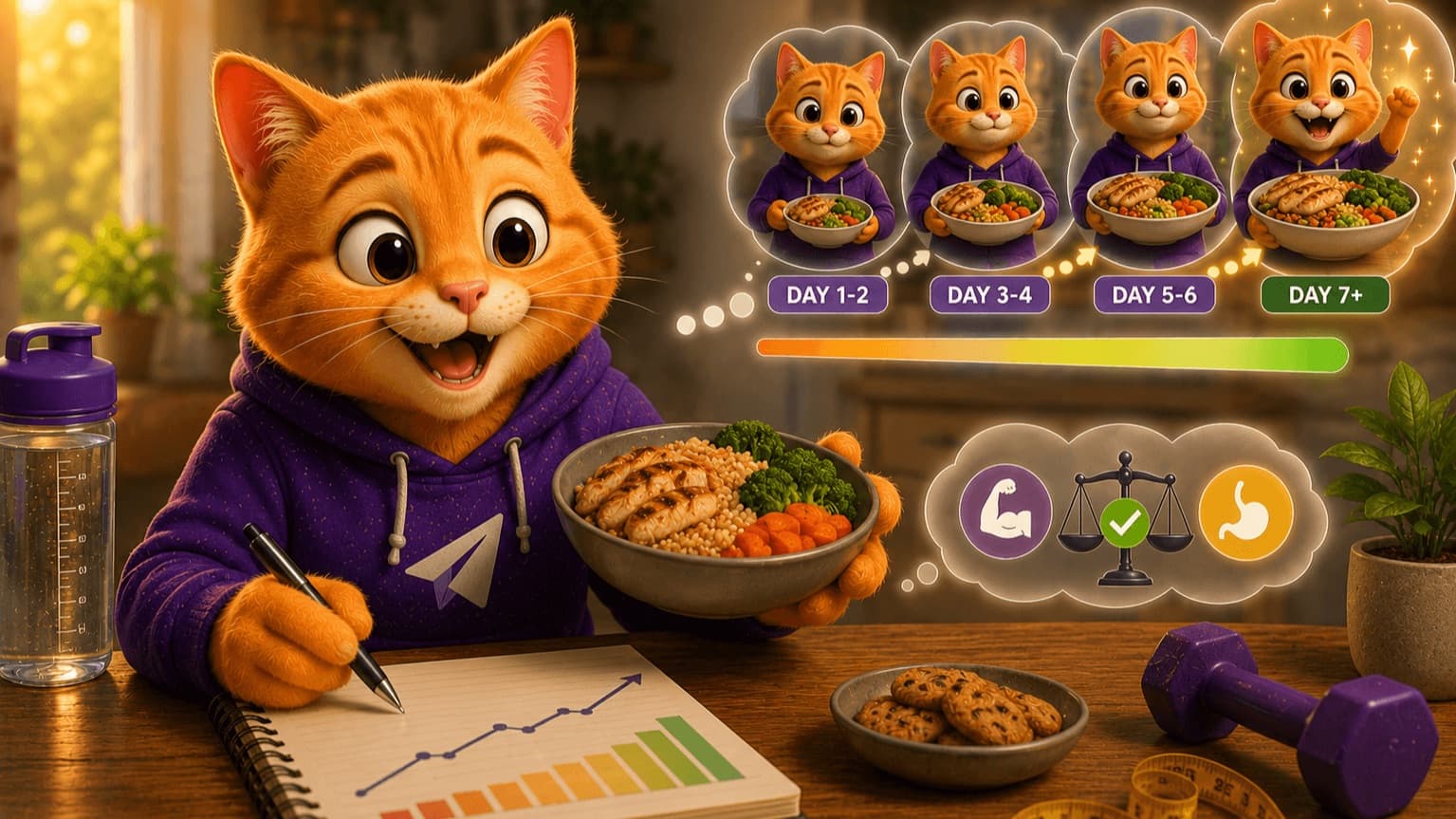
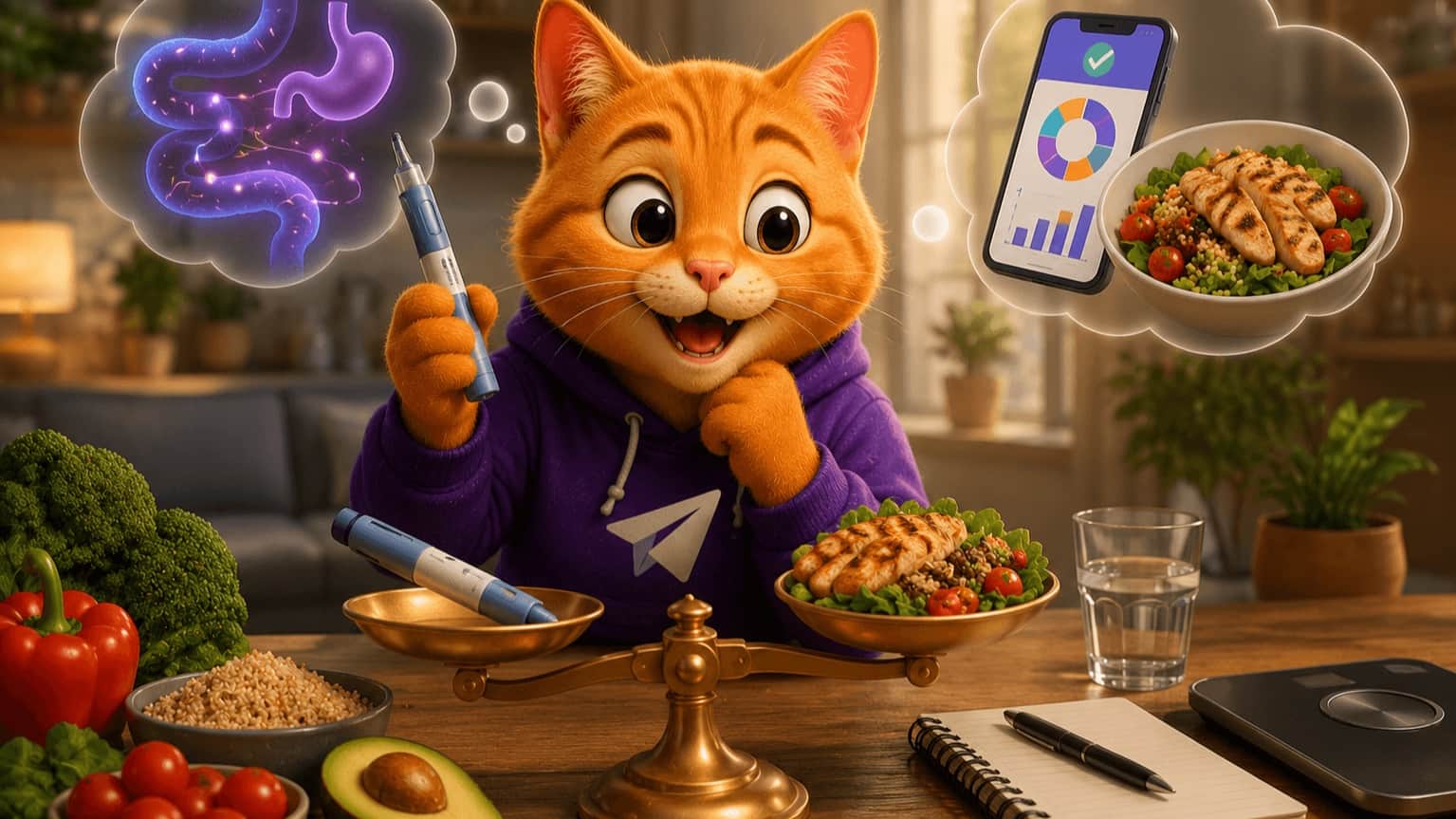
GLP-1 receptor agonists — semaglutide (Ozempic, Wegovy), tirzepatide (Mounjaro, Zepbound), and the rest of the class — work mostly by suppressing appetite. People on them eat less because they're not hungry. Weight comes off without conscious calorie restriction. So a fair question follows: do you still need to track? The honest answer is yes, but the reason changes. The goal stops being "stay in a deficit" (the drug handles that) and becomes "don't fall below your nutritional floor" — especially protein, fiber, and total calories at the low end. Below is what to watch and why.
Disclaimer up front: nothing here is medical advice. Talk to whoever prescribed your GLP-1. This is about how to handle food logging while on one.
What changes on a GLP-1
- Appetite drops, sometimes sharply. People often go from eating 2,200 kcal to 1,200 kcal without trying.
- Meals get smaller. Half a sandwich feels like a full meal. You stop earlier, often mid-bite.
- Some foods become unappetising — sugary, very fatty, very dense food often becomes unattractive.
- Total food volume drops, which means total micronutrients drop unless you concentrate them.
- Weight comes off — but a meaningful share of it can be lean mass if protein intake collapses with everything else.
Try KusWise on Telegram — log meals by photo, voice, or text in your existing chat. Free to start, no app to install.
Open in TelegramWhy tracking still matters
The drug solves the deficit problem. It doesn't solve composition or floor problems. Three things go wrong on GLP-1 without tracking:
- Protein crashes. Most adults need 1.2–2.2 g per kg bodyweight. A small appetite easily lands you at 0.6 g/kg, which is why a significant share of weight lost on GLP-1 can be lean mass — bad for metabolism, bad for the post-drug phase.
- Fiber crashes. Lower food volume often means lower vegetable, fruit, and whole-grain intake. Constipation is a well-known GLP-1 side effect for exactly this reason.
- Total calories can fall too low. Below ~1,000–1,200 kcal/day for women, ~1,200–1,400 for men, you start to feel terrible — fatigue, hair shedding, mood drops. The drug doesn't know your floor; you do.
The shift: from ceiling to floor
Off GLP-1, tracking is about a ceiling — don't exceed your TDEE minus 400. On GLP-1, tracking flips to floors. Hit these every day, even when you're not hungry:
- Protein floor: 1.2–1.6 g/kg bodyweight, daily, non-negotiable. For a 70 kg adult, 85–110 g.
- Fiber floor: 20 g/day minimum, ideally 25–35 g.
- Calorie floor: 1,200–1,400 kcal/day depending on size. Below that, even on a GLP-1, you're under-eating and side effects pile up.
- Water floor: 2 litres/day. Nausea and constipation get worse when you're dehydrated.
Practical food choices on small appetites
When you can only eat half a meal, the half you eat needs to count. Prioritise:
- Lean protein first, every meal. Greek yogurt, eggs, cottage cheese, chicken, fish, tofu, whey shake. Eat it before the carbs.
- Vegetables and fruit for fiber. Berries with yogurt. A handful of greens with the protein. They're tiny calorie cost and pay back in fiber.
- Drink your calories selectively. A protein shake is often easier than a meal when you're full from breakfast.
- Skip the empty calories. The dessert that used to fit your deficit doesn't fit your tiny appetite anymore — every calorie has to do work.
Tracking that doesn't fight the drug
Spreadsheets and search-based apps fall apart on GLP-1 because the meals are too small and too irregular to make logging worth the friction. A photo or voice log shines here — small portion of Greek yogurt at 11am because it's the only thing you can stomach, photo it, log it, move on. The bot handles the maths; you handle the eating.
KusWise's accept/reject loop is also genuinely useful here: the bot proposes the portion, you adjust down because you ate half the bowl. One tap. Logged. Compare that to opening MyFitnessPal, searching, scrolling, finding the wrong entry, adjusting the gram weight — by which point the next wave of nausea has hit and you've quit.
Coming off the drug
When (if) you taper off, appetite returns. If you've kept protein high and lean mass intact during the drug phase, the rebound is much smaller. If you didn't, it's much larger. This is the strongest argument for tracking during the drug phase: not for the deficit, but for the floor that protects your post-drug body.
See our reverse dieting guide for the slow-add-back playbook — it applies post-GLP-1 too.
"GLP-1 takes the deficit problem off the table. Tracking is now about everything else."