Intermittent fasting (IF) is a scheduling pattern: you eat in a window (usually 8 hours) and don't eat the rest. It produces weight loss for many people. The mechanism is boring and not magic: a shorter eating window naturally reduces calorie intake. The fast itself doesn't burn fat through some metabolic trick.
If you're considering IF, here's what's real, what's marketing, and how macros fit into a fasting protocol.
What IF actually does
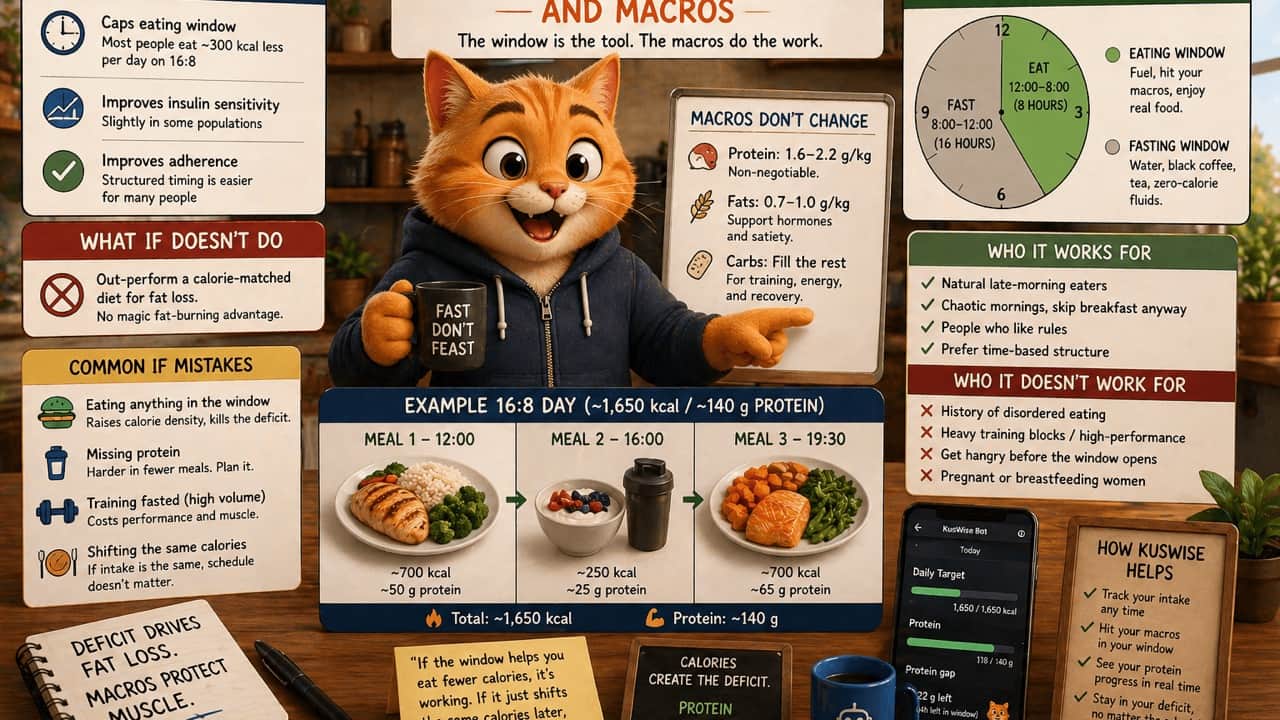
Three things, each modest. First, it caps eating window — most people eat ~300 kcal less per day on 16:8 simply by skipping breakfast. Second, it improves insulin sensitivity slightly in some populations. Third, it raises adherence in people who find structured timing easier than calorie counting.
What it doesn't do: out-perform a calorie-matched non-fasting diet for fat loss. Multiple controlled trials (Lowe et al. 2020 is the cleanest) found no meaningful difference between IF and continuous restriction at matched calories.
Try KusWise on Telegram — log meals by photo, voice, or text in your existing chat. Free to start, no app to install.
Open in TelegramMacros inside the eating window
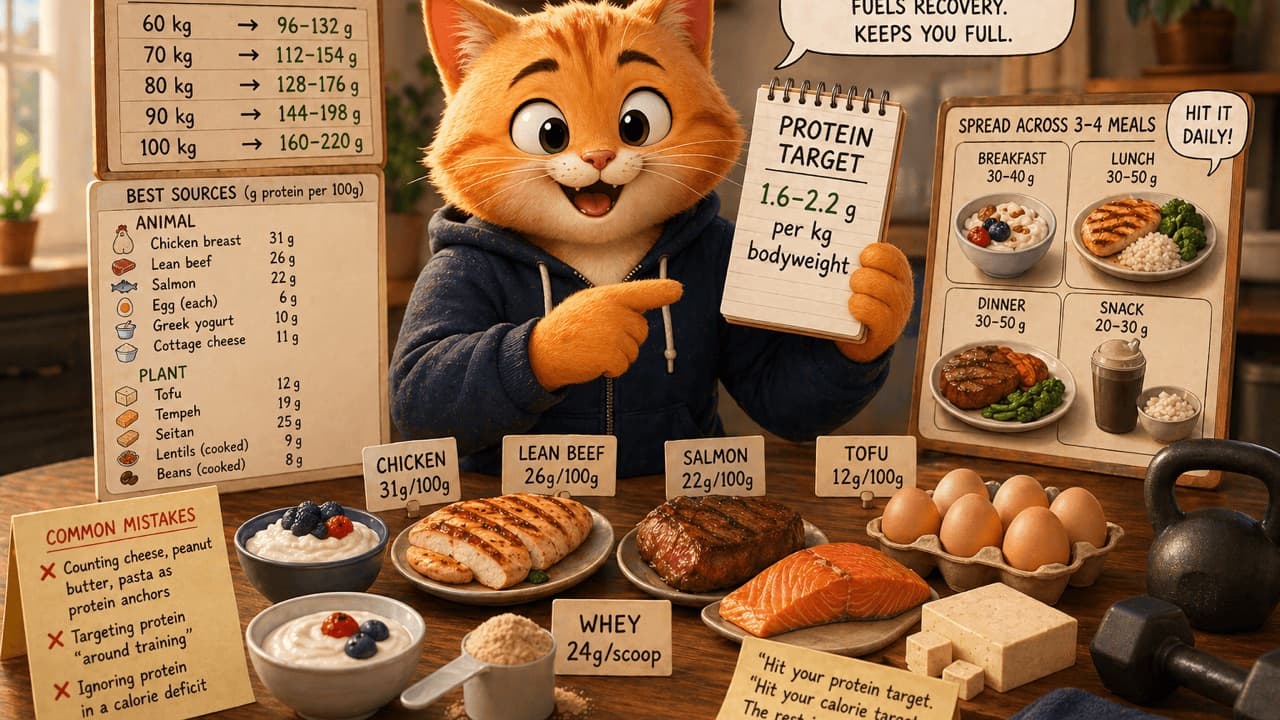
The same rules apply. Hit your protein target — 1.6–2.2 g/kg of bodyweight. The compressed window makes this harder, not easier; you have fewer meals to spread protein across. Two meals at 50 g each plus a protein shake is a common 16:8 setup.
- Meal 1 (12:00) — protein anchor (chicken/fish/tofu) + carbs + vegetables. ~700 kcal.
- Meal 2 (16:00) — Greek yogurt or shake snack. ~250 kcal.
- Meal 3 (19:30) — protein anchor + carbs + fats. ~700 kcal.
- Total: ~1,650 kcal, ~140 g protein.
Common IF mistakes
First, treating the window as a license to eat anything. Many people unintentionally raise calorie density during the window and net-zero on the deficit. The window helps; the food still has to be on plan.
Second, missing protein. Two meals is a tight container for 130–160 g protein. Plan it explicitly or use a shake.
Third, training fasted with high volume. Light steady cardio fasted is fine. Heavy strength sessions or sprint work fasted will cost you reps and risk muscle loss.
Who IF works well for
People who naturally don't get hungry until 11–12. People with chaotic mornings who'd skip breakfast anyway. People who like rules. People who find calorie counting tedious and prefer time-based structure.
Who it doesn't work for: anyone with a history of disordered eating, athletes in heavy training blocks, people who get hangry before the window opens, pregnant or breastfeeding women.
"If the window helps you eat fewer calories, it's working. If it just shifts the same calories later, the schedule was incidental."
How KusWise handles this
KusWise doesn't care when you log — the bot tracks your daily total regardless of window. If you're running 16:8, the daily target stays the same; the bot just shows your protein progress concentrated in 8 hours. Open in Telegram, send /start.