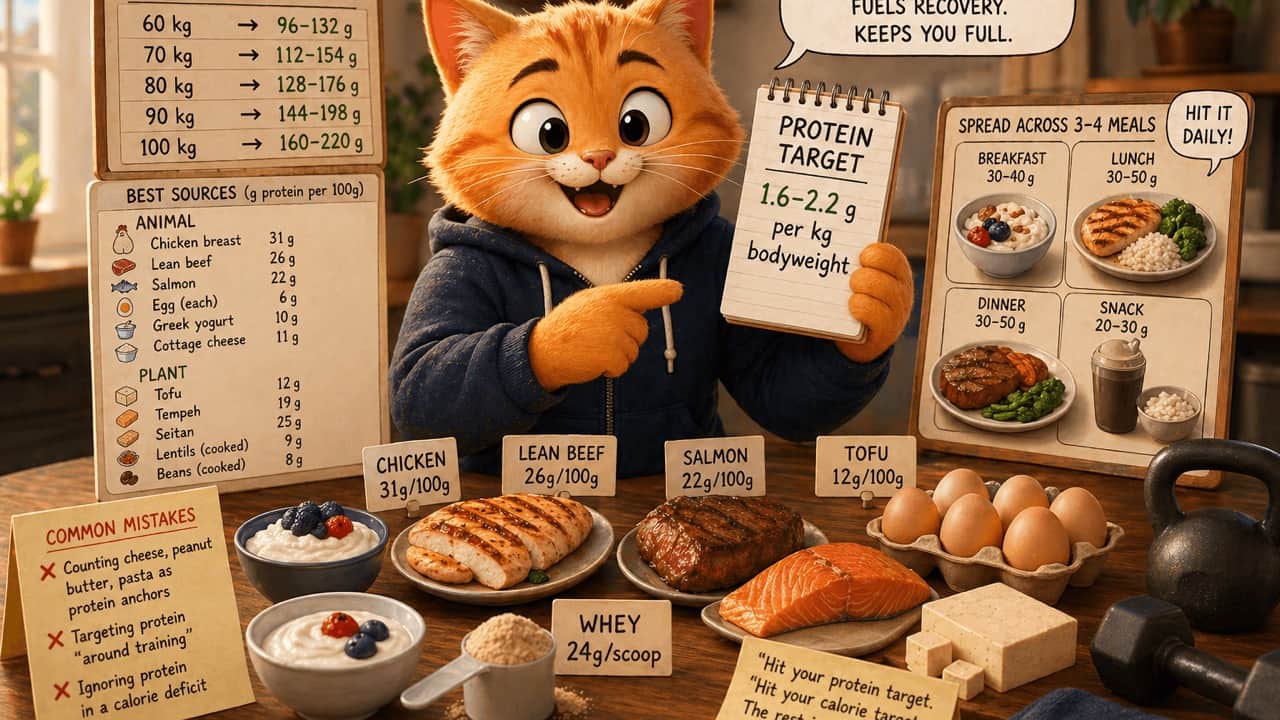
If you do nothing else right with your nutrition, get protein right. The research has settled on a band: 1.6–2.2 g of protein per kg of bodyweight per day, for anyone who trains and especially anyone in a calorie deficit. Below 1.2 g/kg you lose muscle. Above 2.5 g/kg gives diminishing returns and a tired digestion.
Where the 1.6–2.2 g/kg number comes from
Multiple meta-analyses across hundreds of trials converge here. Helms et al. and Morton et al. are the most cited. The honest summary: protein intake at 1.6 g/kg captures the bulk of muscle-protein-synthesis benefit; pushing to 2.2 g/kg gives a small additional benefit during aggressive cuts and high-volume training; past that, no measurable advantage.
If you don't train, 1.2–1.6 g/kg is fine. If you're cutting and lifting, push to 2.0+ g/kg. If you're a bodybuilder near contest, the high end of the range is your floor.
Try KusWise on Telegram — log meals by photo, voice, or text in your existing chat. Free to start, no app to install.
Open in TelegramWhat that looks like for real bodyweights
- 60 kg → 96–132 g protein/day
- 70 kg → 112–154 g/day
- 80 kg → 128–176 g/day
- 90 kg → 144–198 g/day
- 100 kg → 160–220 g/day
How to actually hit the number
Most people fall short because they don't anchor a meal around protein. Build each meal around a protein source first, then add carbs and vegetables. Default sources by category:
- Animal: chicken breast (31g/100g), lean beef (26g), salmon (22g), eggs (6g each), greek yogurt (10g/100g), cottage cheese (11g/100g).
- Plant: tofu (12g/100g), tempeh (19g/100g), seitan (25g/100g), lentils (9g/100g cooked), beans (8g/100g cooked).
- Powders: whey (24g/scoop), casein (24g), plant-blend (20–24g).
Spread across 3–4 meals of 30–50 g each. Total daily protein matters more than timing — if you fit your daily target across 2 meals, that's still fine.
Common mistakes
Counting cheese, peanut butter, or pasta as protein sources. They contain some, but the calorie cost per gram of protein is poor — you'll hit your calorie target before your protein target. Treat them as flavour or carb/fat slots, not protein anchors.
Targeting protein "around training." The 30-minute anabolic window is mostly a myth. Daily total is the lever. Eat protein when you eat — it doesn't need to circle your gym time.
Protein in a calorie deficit
When energy is restricted, protein becomes more important, not less. The deficit forces the body to break down tissue; protein and resistance training together steer that loss toward fat instead of muscle. During a cut, treat protein as a non-negotiable floor and let carbs/fats absorb the calorie reduction.
"Hit your protein target. Hit your calorie target. The rest is preference."
How KusWise handles this
KusWise tracks daily protein and shows a quiet "protein gap" indicator — how many grams short of your target you are with hours left in the day. The bot suggests a high-protein snack or meal swap to close it. Open KusWise in Telegram and send /start. To get your personal protein target first, run the calculator.