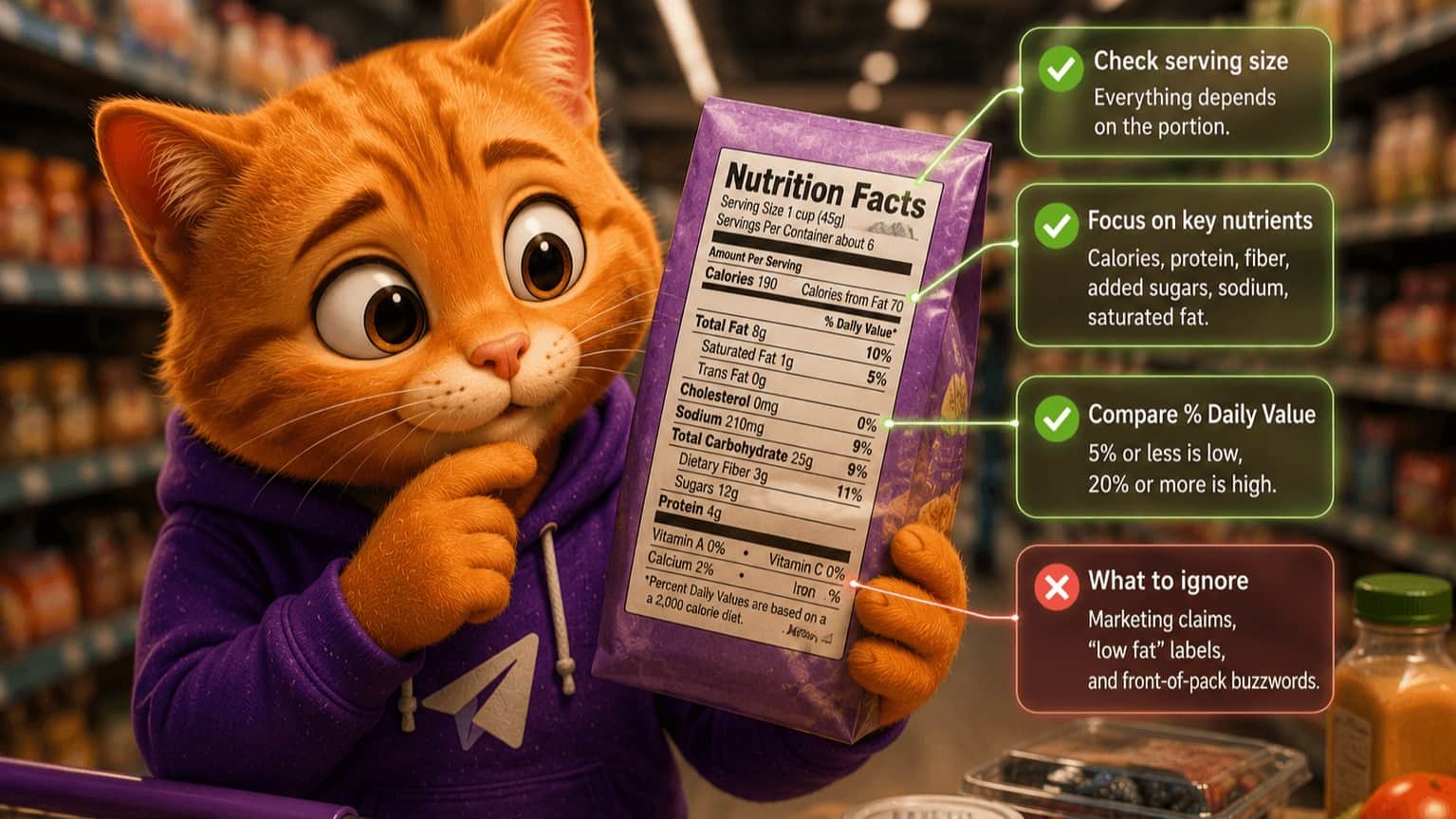
A nutrition label has 15+ numbers on it. Four of them matter for almost everyone: calories, protein, fiber, and added sugar. The rest — % daily value, vitamins on a candy bar, sodium expressed in milligrams next to a percentage — is noise that distracts from the decision you're actually making. Here's the reading order and the trap to avoid on every panel.
Rule 1 — read the serving size first, every time
This is where the label tries to trick you. A 12 oz bottle of juice often lists "Servings per container: 2.5" — the calories you see are per 5 oz, not per bottle. A bag of chips that says 150 kcal might be 150 per ounce, and there are 4 ounces in the bag. Always read the serving size before you read anything else, and multiply.
If a label lists a serving as "1/4 cup" or "about 12 pieces", and you don't measure, you ate twice it. Almost everyone does.
Try KusWise on Telegram — log meals by photo, voice, or text in your existing chat. Free to start, no app to install.
Open in TelegramRule 2 — calories per serving, then your serving
Once you know the serving size and you've measured (or estimated) what you actually ate, multiply. Calories × actual_servings = what you log. That single multiplication is more important than every other line on the panel.
Rule 3 — protein matters, fiber matters, the rest depends
After calories, look at these three:
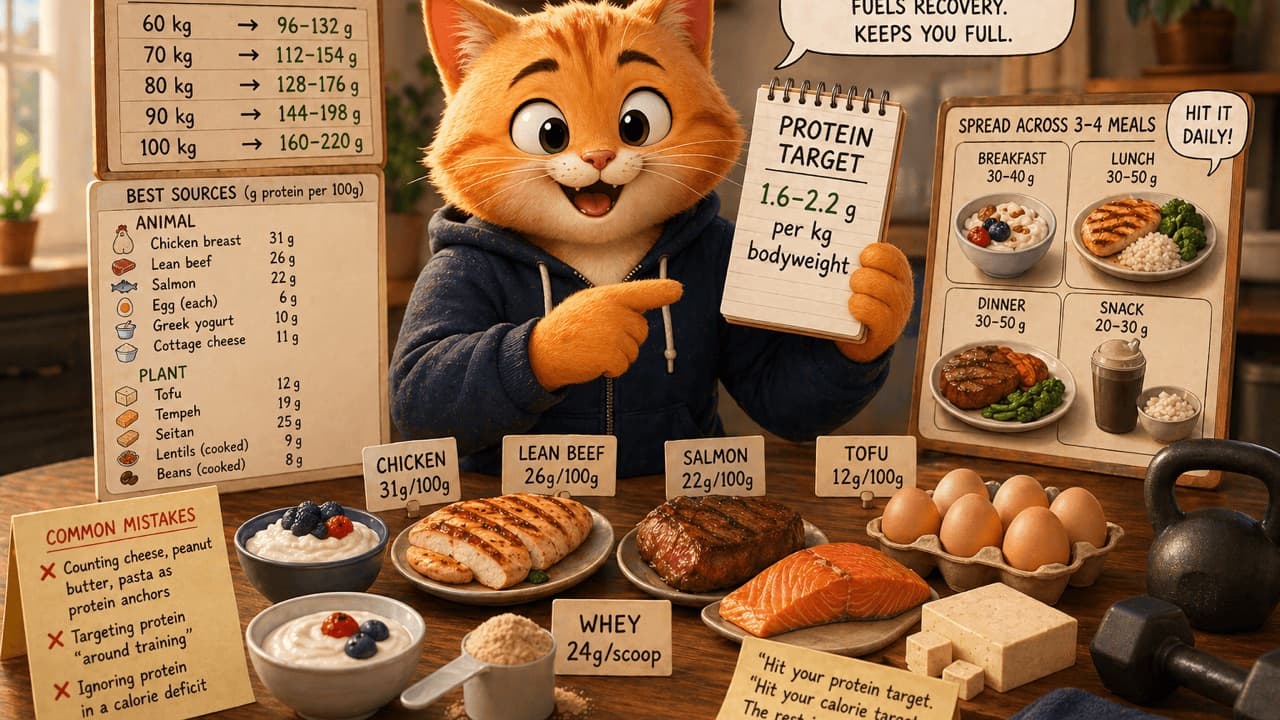
- Protein in grams — most people don't hit their daily target (see protein per kg of bodyweight). Anything over 10 g per serving is a meaningful contribution.
- Fiber in grams — aim for 25–35 g per day total. A bread that delivers 4–6 g per slice is a real find; one that delivers 1 g is white bread in disguise.
- Added sugar in grams — this is the line introduced specifically to expose what "total sugar" was hiding. Anything over 6 g of added sugar per serving on a non-dessert food is worth questioning.
Rule 4 — what to ignore
Most of the label is noise for daily eating:
- "% Daily Value" — calibrated to a 2,000 kcal generic diet that probably isn't yours. Ignore.
- Vitamins A, C, calcium, iron — on packaged foods, the amounts are usually trivial and the brand added them to look healthier. Get vitamins from whole food.
- "Cholesterol" — current science says dietary cholesterol matters far less than saturated fat for blood lipids in healthy adults. Don't optimise for it unless your doctor told you to.
- "Sodium" — only matters if you have a medical reason or if you're processed-food heavy. For most home cooks, you're already low.
The marketing words that don't mean anything
On the front of the package, these terms have weak or no regulatory meaning in most jurisdictions:
- "Natural" — almost meaningless. Sugar is natural.
- "Light" — usually means "less of something compared to our regular version", which can mean less salt, fat, or just colour.
- "Made with whole grains" — the first ingredient might still be white flour. Check the ingredient list.
- "Low fat" — often means "high sugar" because they had to add something for flavour.
- "Gluten free" — irrelevant unless you have coeliac disease or non-coeliac gluten sensitivity. Doesn't mean lower calorie.
The ingredient list tells the real story
Ingredients are listed by weight. If sugar is in the first three ingredients, it's a sugar product. If "whole wheat flour" is the first ingredient, it's actually mostly whole wheat. Five-ingredient lists are usually closer to real food than 20-ingredient ones. This rule isn't a moral judgement; it's just useful pattern recognition for a 5-second supermarket decision.
Just scan the barcode
Reading labels well is a skill — but you don't have to use it every time. KusWise has barcode scanning built in. Snap the label, the bot reads the panel directly, returns calories, macros, fiber, and ratios — and asks you to confirm the serving size. The bot does the multiplication for you. No more "wait, is that 1/4 cup or the whole bag?".
Use the eyes-on-label skill when you're shopping (choosing what to buy) and the barcode-scan flow when you're logging (after you've bought it). The two work together.
"Most nutrition labels are designed to be skimmed for a marketing decision, not a tracking decision. Skim for buying. Scan for logging."